Starting over
Back in July, I showed you an intro in five shots. It told the story with still pictures. But next to the game as it stands today, it no longer suited me: you read the story more than you lived it.
So I rebuilt it entirely, with new pictures and a new edit.
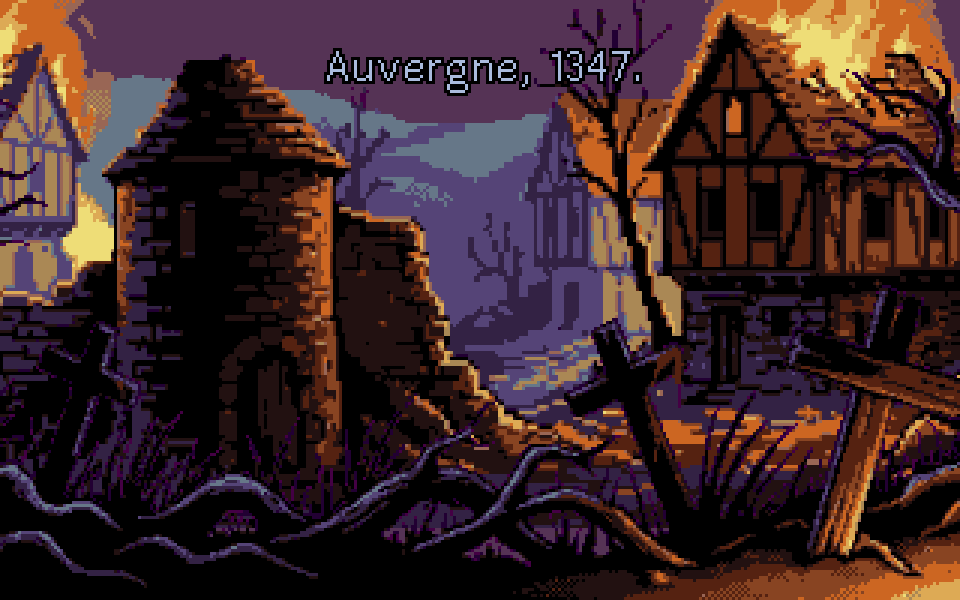
Three shots
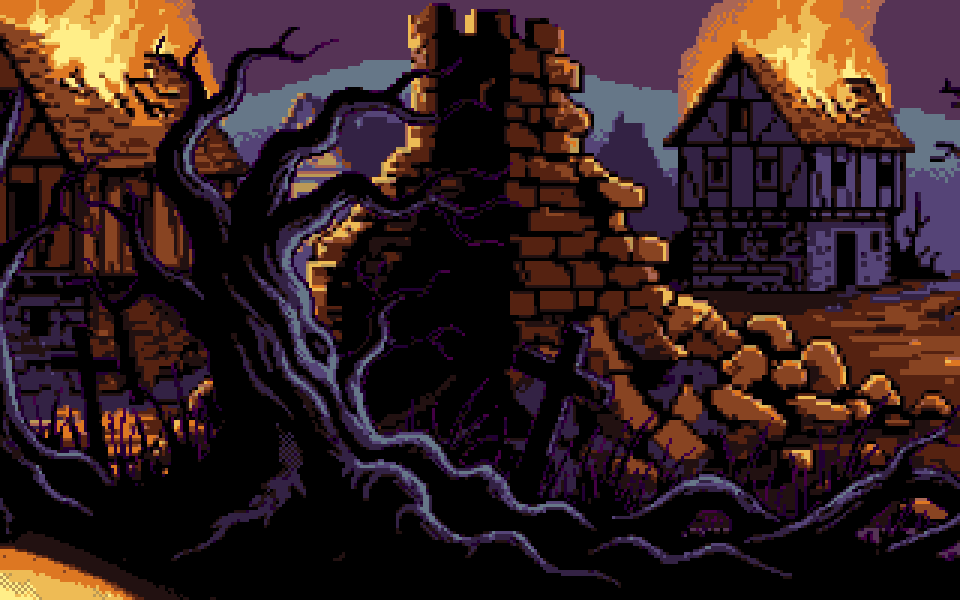
The first one is the valley. A burning village that the camera slowly scrolls past, while dead trees and wooden crosses slide by in front.
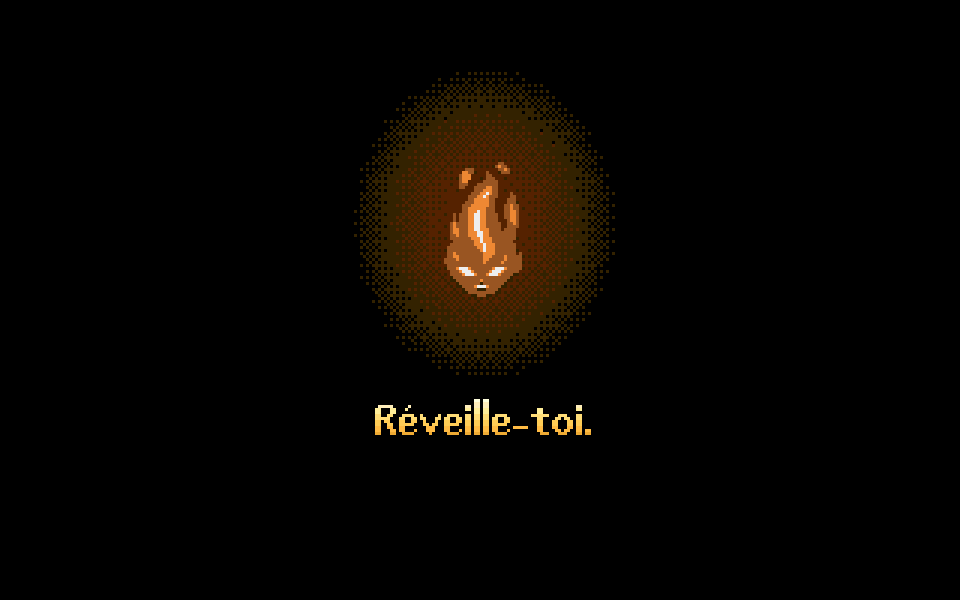
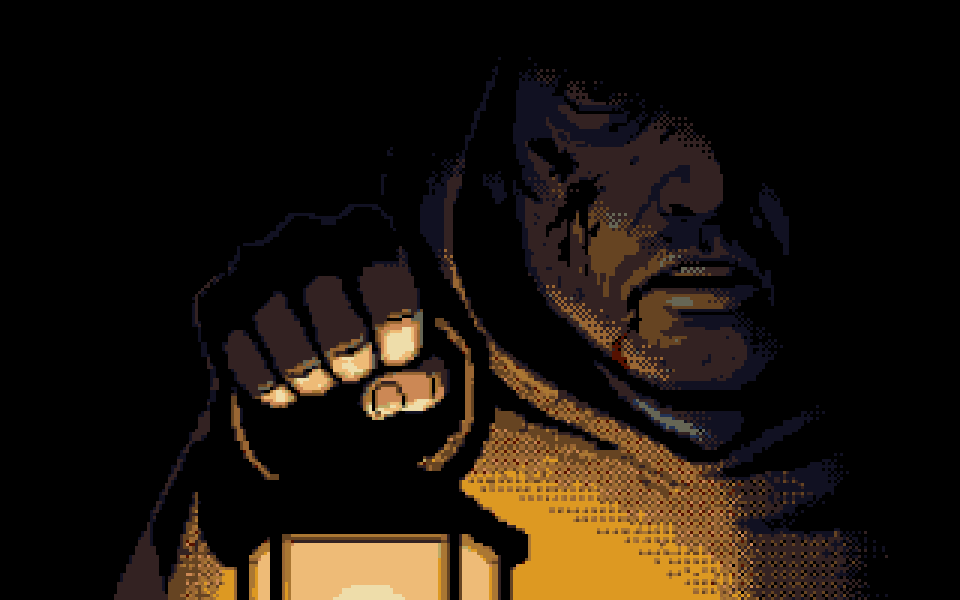
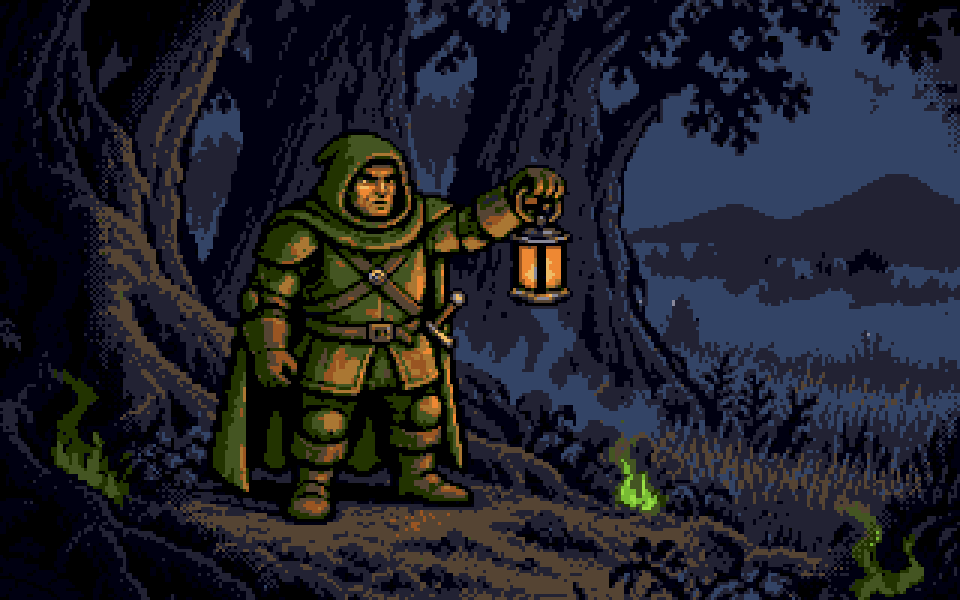
The second one opens in total darkness. A small flame kindles, and its light slowly reveals a face, then a clearing where the plague has already struck. I won't tell you more: this is where the story gets going.
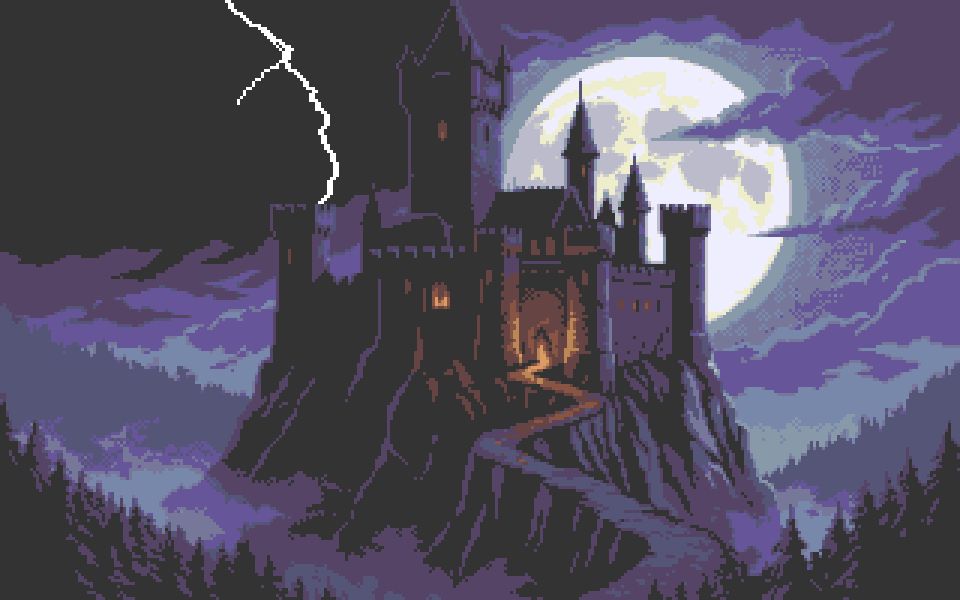
The third one is Morteveille castle, perched on its rock under the full moon, with lightning striking its highest tower. The tower Edgar must reach before dawn.
For the text, I wanted something very simple: letters outlined in black, laid straight onto the picture, with no banner and no frame. Edgar's words are a cold silver. The flame's are golden.
The screenshots in this post come from the French version of the intro. In English, every line is in English, of course.
Horizontal scrolling and parallax
On the Atari, this is the shot that took me the longest, by far.
The idea is simple: two layers scrolling at different speeds. The village at the back, the trees and crosses in front, passing faster. That difference is what gives depth, the feeling that you are really travelling along the valley.
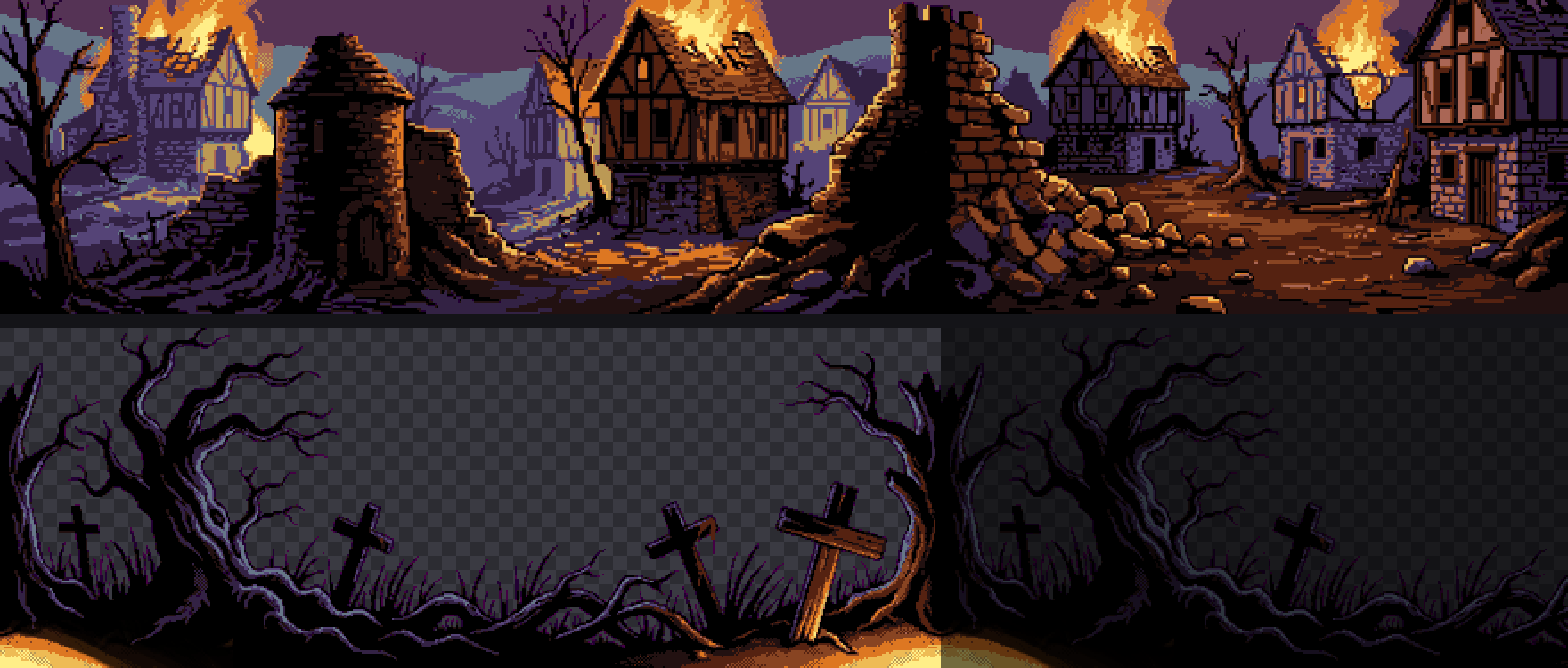
What I take away from it: for scrolling to be smooth, every layer has to move on almost every frame. A very slow pan, one whole pixel at a time, simply does not exist. So it had to go faster, and therefore further. I extended the village to almost three screens wide, and reworked the seam between the old part and the new one by hand so it would not show. The trees and crosses, for their part, repeat: I retouched the sheet so that its end runs into its beginning, with no visible break.
Then all of it had to run.
On the STe, the machine and the blitter share the work
On the STe, the village scrolls thanks to hardware scrolling: the machine shifts the displayed picture by itself, without me having to redraw anything. The trees and crosses, however, have to be redrawn over the village at every step, and that is the job of the blitter, the chip that copies chunks of picture at full speed.
The trouble is the big tree on the left. The foreground did not fit in the time I have between two frames, and that tree, with all its branches, made up almost all of its weight. I could have made the tree smaller: that gained almost nothing. I could have removed it: but I was set on keeping those trees rising in front of the village. So the blitter only redraws the foreground every other frame, and in between, hardware scrolling moves everything along. To the eye, it works.
One last detail, which turned out to be anything but: the text. When the machine shifts the whole picture, it also shifts the letters laid on top of it. To keep them still while the valley scrolls underneath, I put them back in the right place, at the right moment, at every step.
On the STf, a steady pace rather than stuttering depth
The STf has neither hardware scrolling nor a blitter. Everything goes through the processor, and sliding two layers over each other was too heavy.
At first I tried to make up for lost time: when a frame fell behind, the next one moved a little further to get back to the right place. Bad idea. One delay led to another, and every catch-up showed... of course. So I did the opposite. On the STf, the village and the foreground are put together once and for all into one big picture, which moves one pixel per frame, never skipping, from the start of the shot to the end. You lose the depth, you keep perfectly regular motion, and that is what matters most.
Light, almost for free
The second shot rests on a halo: the light of the flame, in rings that grow darker as they spread out. With sixteen colours on screen, those rings are dithered: alternating dots of two shades.
Drawing that halo is expensive on the Atari. Composing it takes the time of several frames, far too much to animate it by making it grow. So it is drawn only once, at its final size, while everything is still black. And it is through the colours that the light comes on: the shades slowly rise, and the face appears. The flicker of the flame works the same way, colours going up and down, without touching a single pixel.
Finally, the clearing is taller than the screen. The camera slowly tilts down, from the treetops to the ground. On the STe, the machine can start the display at any line of the picture: all I have to do is tell it where, line after line. The STf cannot do that, so I copy the picture, shifted by one line, at every step.
What's next
For now, there is no background music. The sound effects will come in a separate step.
To see where the game stands, head to the home page.
Leave a comment